


Buy Rotating Residential Proxies
The cheapest residential proxies on the market — 54M+ ethically sourced IPs across 195+ countries, with rotating and sticky sessions.
What Is a Residential Proxy?
A residential proxy routes your request through a real household device on a consumer internet connection, so the site you are calling sees an IP address that an ordinary internet provider handed to a home — not an address in a datacenter range. The reply travels back the same way, and to the target the request looks like an ordinary visitor in that location.
Pricing
Core Residential
For Just
$0.49/GB

Core Residential Proxies
High quality and fast Residential Proxies
- 54M+ ethically sourced residential IPs
- Rotating & Sticky IPs
- Country, City & more geo-targeting
100GB/month
$49/month
$0.49/per extra GB
How Much Do Residential Proxies Cost?
| Plan | Per GB | What it means |
|---|---|---|
| 100GB monthly plan | $0.49/GB | $49 a month, then $0.49 for each extra GB. 1 Day Trial Available. |
| Pay as you go, 15+ GB | $0.99/GB | No subscription, and the traffic never expires. |
| Pay as you go, 1,000+ GB | $0.79/GB | The volume rate without committing to a monthly plan. |
Traffic is billed per GB, with geo-targeting and sticky sessions included. Try Core Residential free, backed by our 30-day money-back guarantee.
The basics
How Do Residential Proxies Work?
Why a target treats a household address differently from a server, and what our own network is made of.
A site that cares who is visiting sorts addresses by who owns the block they sit in. A datacenter range belongs to a hosting company and can be filtered wholesale at no cost to the site, while a residential range belongs to an ISP whose subscribers are the site’s own audience. Filtering those costs the site real visitors, which is why residential addresses get through where datacenter addresses are challenged — and why the traffic is worth paying for by the gigabyte.
Evomi’s Core Residential pool is 54M+ IPs, ethically sourced from a global network of volunteer nodes, reachable in 195+ countries. The documented figures for the network are an average response time under 0.5 seconds and a 99.95% connection success rate. Every request leaves from a new IP unless you explicitly ask for one to be held.
The connection, in short
- Endpoint
- rp.evomi.com, one host for every country
- Ports
- HTTP 1000, HTTPS 1001, SOCKS5 1002
- Auth
- Username and password, with targeting in the password field
- Rotation
- A new IP on every request unless a session key holds one
Need one specific country?


Need a different type of proxy?
Still comparing proxy types? Find every rate, billing model, and trial and refund detail on our pricing page.
Looking for the Cheapest Residential Proxies?
It is not only the price. Proxyway benchmarked Core Residential in July 2026 and reported that in the US, UK and EU they “haven’t tested a provider with better latency.”
 $4/GB*
- Free GEO TargetingYes
- ASN FilterYes
- TCP/IP FilterYes
- Fraud Score FilterNo
- Response Time FilterNo
 $3/GB*
- Free GEO TargetingYes
- ASN FilterNo
- TCP/IP FilterNo
- Fraud Score FilterNo
- Response Time FilterNo
 $2.75/GB*
- Free GEO TargetingYes
- ASN FilterYes
- TCP/IP FilterNo
- Fraud Score FilterNo
- Response Time FilterNo

- Free GEO TargetingYes
- ASN FilterYes
- TCP/IP FilterYes
- Fraud Score FilterYes
- Response Time FilterYes
$4/GB*$3/GB*$2.75/GB*Pricing basis, filter costs and trademarks
Prices are per GB on each provider’s cheapest self-serve plan covering 100 GB a month, excluding VAT. Where a provider publishes no rate at that volume, our own most recent verified figure is shown. Last reviewed on 11 August 2026.
Evomi’s ASN, TCP/IP, fraud-score and response-time filters are expert settings and can increase your cost; the dashboard shows the exact rate for each. Decodo includes ASN targeting at no extra cost. SOAX publishes ASN targeting from its Scale plan ($1,500/mo), above the Builder plan quoted here.
“Oxylabs”, “SOAX”, “Decodo” are trademarks of their respective owners. Comparisons are for informational purposes only.
Expert Features
Residential Proxy Features
Looking for a proxy cheap, without compromising on quality or features? Evomi's Core Residential Proxies include expert settings designed to maximize your results at the lowest possible cost.
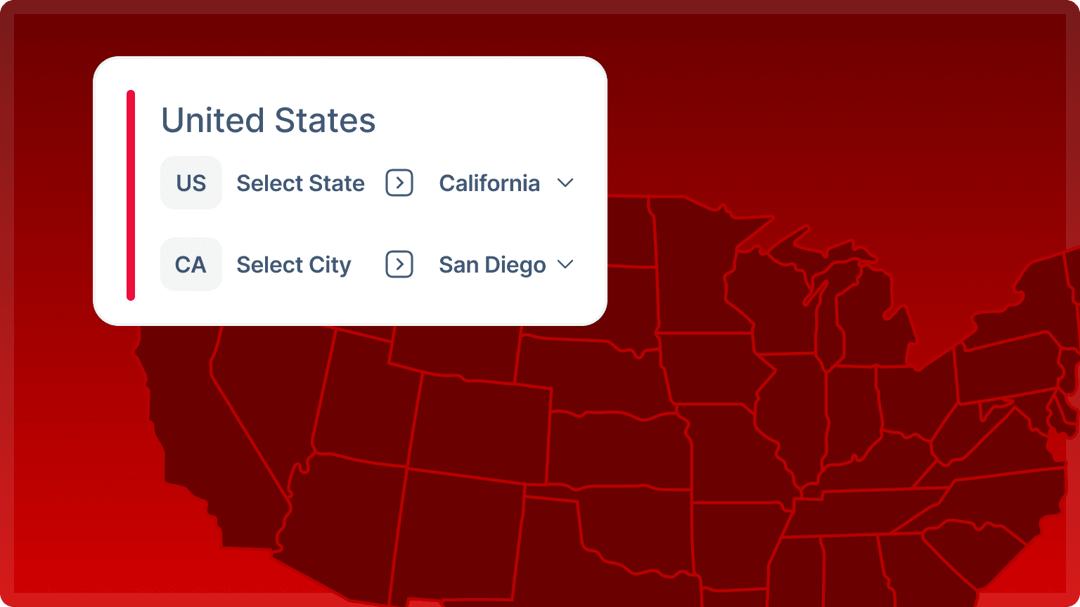
City/State/Country targeting
Target any location right down to the city and state level. Evomi makes precise geo-targeting simple — and affordable.
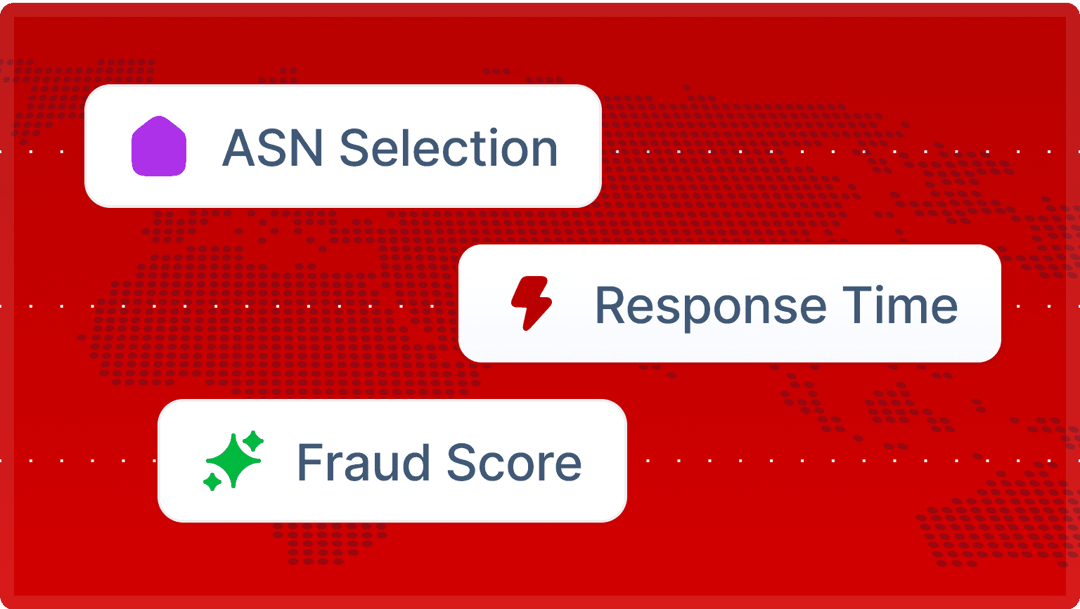
Response Time, Fraud Score & More
Fine-tune with response time, fraud score, ASN selection and more advanced settings. Evomi makes powerful, reliable proxies highly accessible.
TCP/IP Fingerprint
Match authentic TCP/IP fingerprints for consistent, real-user browser profiles — affordably with Evomi's Core Residential Proxies.
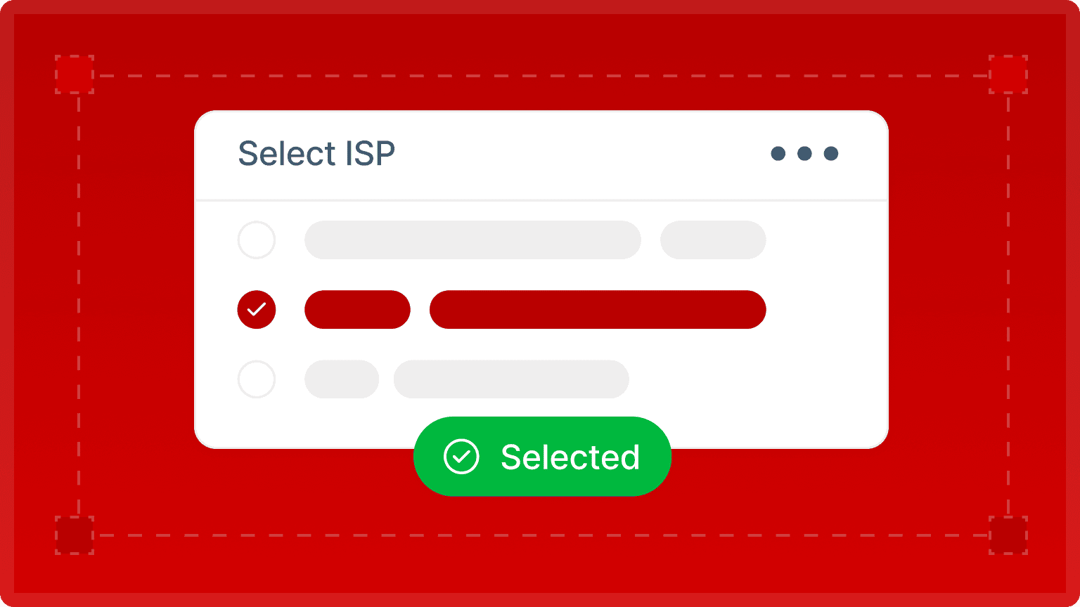
ISP Targetting
Precisely select proxies from your preferred ISP provider. Evomi's residential proxies ensure targeted IP access at the most competitive rates.
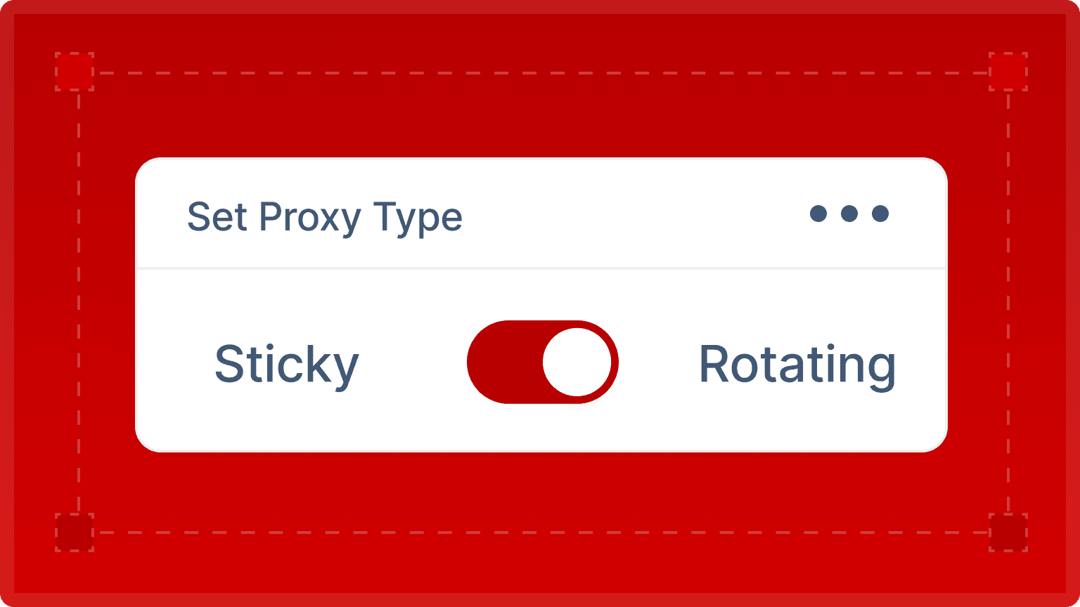
Rotating & Sticky IP Sessions
Whether you need constantly rotating IPs for fresh sessions or stable, long-term sticky sessions, Evomi's residential proxies deliver flexibility and affordability.
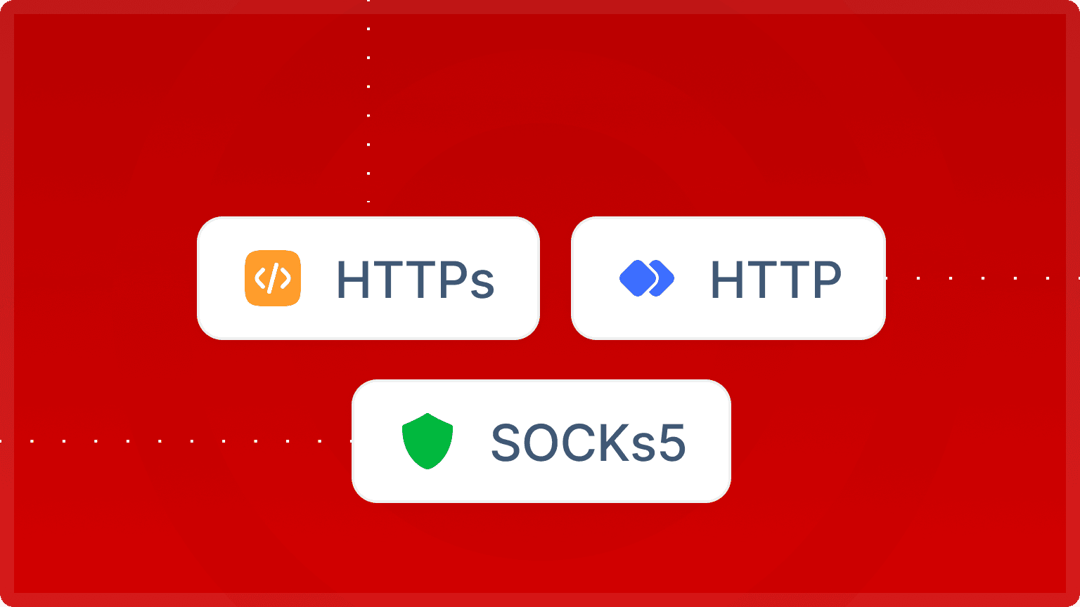
Multiple Protocols
Evomi supports multiple protocols including HTTP, HTTPS, and SOCKS5, providing versatile connectivity options without extra costs.
Control
How Do Rotating and Sticky Sessions Work?
Every option below is a key you append to the password field — no second endpoint, no plan upgrade, no surcharge.
Rotate every request
no parameterThe default. Each request leaves from a different residential IP, which is what you want when you are collecting many pages from one target and no page depends on the last.
Sticky session
session-<6–10 chars>Holds one IP across requests and is tuned for overall success rate, so it may move you to keep the connection working. Add lifetime-<minutes> to say how long it holds: 30 minutes by default, up to 1440 — a full 24 hours. Ask for more than the maximum and the request returns a 412.
Hard session
hardsession-<6–10 chars>Same format, opposite priority: it keeps the exact IP for as long as the network can, and ignores lifetime. Use it where a logged-in session breaks the moment the address changes.
Add a session key to the password field to keep the same IP. Unlimited concurrent sessions are included on every plan.
| Key | Selects | Example |
|---|---|---|
country- | A country, by ISO code. | country-US |
region- | A state, province or territory inside that country. | region-california |
city- | A city, lowercase, with any space written as a dot. A city with no IPs available returns a 412. | city-new.york |
zip- | One postal code, narrower than a city. This one is an expert filter rather than free targeting: it bills extra bandwidth and needs Core Residential. | zip-90210 |
geosource- | Which geolocation database resolves the keys above, for when the location has to agree with your own checker. Defaults to ip-api.com. | geosource-maxmind |
Choose country, region, or city targeting free on every plan. ZIP and expert filters use additional bandwidth. Find all available locations and ISPs in the Proxy Generator.
Expert settings
Filters You Only Get on Core Residential
The documented parameters that pick an IP on something other than where it is. Every one of them is available on Core Residential and nowhere else in the range.
| Parameter | What it filters on |
|---|---|
fraudscore-<score> | Caps the Scamalytics fraud score of the IPs you are given, for targets that judge addresses on reputation. |
latency-<ms> | Rejects any IP slower than the round-trip time you name. |
device-<type> | Restricts the pool to one device family — windows, unix or apple. |
activesince-<minutes> | Asks for IPs that have already held their connection for that long, which is the proxy for a stable line. |
isp-<provider> | Takes every IP in the request from one internet provider. |
asn-<number> | The precise form of the same idea: one autonomous system, by number. |
http3-1 | Turns on HTTP/3 over QUIC for targets that prefer it, which the docs note runs over SOCKS5. |
localdns-1 | Resolves DNS at the exit node instead of ours, so the lookup cannot leak your own resolver. |
Use expert filters when you need extra precision. Your dashboard shows actual and billed usage, and the expert settings reference covers every filter.
Affordable & Reliable Residential Proxies
Get the reliability of a premium residential network at the most competitive price on the market. Evomi combines ethically sourced IPs with speed and stability, giving you unbeatable value. If your targets are the demanding kind, our premium residential proxies add ISP-level targeting and multiple pool options from $2.20/GB.
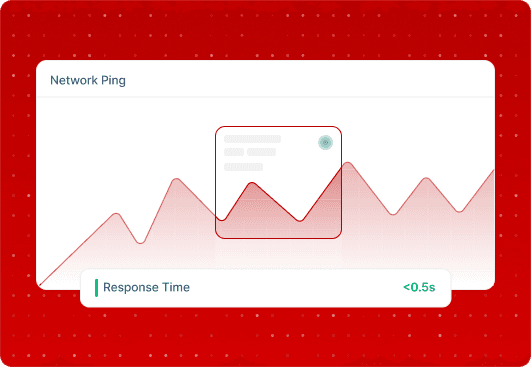
Average 0.5s response times on proxies
99.95% connection success rate
Why Choose Affordable Residential Proxies?
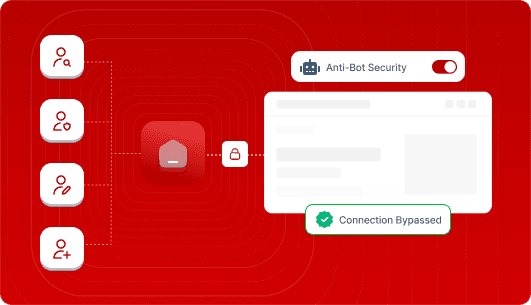
Core Residential proxies offer real residential IPs, providing reliable, real-world connection quality, without the premium price tag of other providers.
- Affordable Prices, Reliable Results
- Reliable Connection Success Rates
- Access Region-Specific Content Effortlessly
- Maintain Ethical & Compliance Standards
Comparison
Residential, ISP, Mobile or Datacenter?
Residential is the middle of the range on both price and trust, which is why it is the default. Here is where each of the other three earns its difference.
Residential
from $0.49/GBReal household devices on consumer lines
The default for volume collection: cheapest per GB of the residential family, and trusted enough for most targets
Static residential (ISP)
from $1.00/IPResidential-registered IPs hosted on premium ASNs
Holding one address for weeks, with bandwidth billed per IP instead of per GB
Mobile
from $2.20/GBReal devices on 3G/4G/5G carrier networks
Targets that treat a carrier IP as their most credible visitor: social platforms, app traffic, mobile ad checks
Datacenter
from $0.30/GBServer IPs in datacenter ranges
Speed and cost on targets that do not check where the address lives
Reviews
What Customers Say About Our Residential Proxies
Verified feedback from teams running Core Residential in production.
Impeccable to say the least.. I appreciate their Core Residential especially, it is very fitting for my needs and GREAT for the price. Highly recommended provider
 Mila J.Netherlands
Evomi delivers market beating pricing, speed, and support. It's super easy to integrate and you can customise the options for proxies beyond what most providers allow. You'll save a lot of money and your uptime by choosing Evomi.
 Anthony ZiebellFounder @ instantapi.ai
Evomi gives us residential proxies for unparalleled price, allowing us to offer advanced ecommerce competition intelligence with fraction of the cost even for ecommerce sites with advanced scraping protection!
 Michal MarhanDeveloper @ deepscout.ai
FAQs
Residential Proxy Questions, Answered
What buyers ask before they integrate. If yours is not here, our support team is on live chat around the clock.
What is a residential proxy?
A residential proxy sends your request through a real household device on a consumer internet connection, so the site you are calling sees an IP address an ordinary internet provider assigned to a home rather than an address in a datacenter range. Because that address belongs to an ISP whose subscribers are the site’s own audience, filtering it costs the site real visitors — which is why residential IPs get through where datacenter IPs are challenged.
How do residential proxies work?
You point your client at one endpoint, rp.evomi.com, and authenticate with a username and password. Evomi picks an IP from the pool, forwards your request from it and returns the response. Targeting and session keys are appended to the password, so switching country or holding an IP is a change to a string rather than a change of endpoint. By default every request leaves from a different IP.
How are the residential IPs sourced?
From a global network of volunteer nodes that opt in to share their connection, which is what the "ethically sourced" claim on this page refers to. Evomi is ISO 27001 certified, SOC 2 Type II compliant and Swiss-operated, and the sourcing is the reason the pool holds up: addresses that were taken without consent are the ones targets recognise and block first.
What does a residential proxy cost?
Core Residential is $0.49/GB on the 100GB monthly plan at $49, with extra traffic at $0.49/GB. Without a subscription, pay as you go is $0.99/GB from 15+ GB and $0.79/GB from 1,000+ GB, and that traffic never expires. Geo-targeting and sticky sessions are included at every price. For comparison, on each provider's cheapest self-serve plan covering the same 100GB a month, excluding VAT, the rate is $4/GB at Oxylabs, $3/GB at SOAX and $2.75/GB at Decodo.
How is residential traffic billed?
Per gigabyte of traffic that passes through the proxy, at the rate of the plan you are on. Expert filters are the one thing that changes the arithmetic: each applies a bandwidth multiplier to the request it filters, cumulative and capped at 15×.
Residential vs datacenter proxies: which should I use?
Datacenter is cheaper and faster and makes sense wherever the target does not check who owns the address. Residential costs more per GB because the addresses belong to real ISP subscribers, which is what gets you past the checks that stop datacenter ranges. The honest test is to try the cheap option first and move up only on the targets that block it.
What is the difference between residential and static residential (ISP) proxies?
Rotating residential draws from a pool of household devices and is billed per gigabyte, so the address changes and the cost follows your traffic. Static residential is one residential-registered IP hosted on a premium network, billed per IP with unlimited bandwidth, so the address stays yours for as long as you keep it. Pick static when an account or a session has to keep seeing the same address for weeks.
Residential vs mobile proxies: when is mobile worth the price?
Residential is the default for volume work — far cheaper per GB, and enough trust for most targets. Mobile earns its higher price on the targets that treat a carrier address as their most credible visitor, such as social platforms, mobile app endpoints and ad checks on mobile inventory.
Do you offer rotating and sticky sessions?
Both, at no extra cost. Rotation is the default: a new IP on every request. A session key holds one IP for 30 minutes by default, and the lifetime parameter extends that to 1440 minutes — a full 24 hours. A hardsession key holds the same address for as long as the network allows instead. Concurrent sessions are unlimited on every plan.
How precisely can I target a location?
By country, and within a country by region or city, across 195+ countries, free on every plan. Narrower selection — a postal code, one ISP or one autonomous system — is available through the expert filters, which cost bandwidth rather than money. The available countries, regions, cities and ISPs are listed in the dashboard’s Proxy Generator.
How fast are they, and how often do connections succeed?
The documented figures for the residential network are an average response time under 0.5 seconds and a 99.95% connection success rate, on 99.9% uptime. Residential routing is inherently slower than datacenter routing, because the request travels through a home connection rather than a server. Proxyway benchmarked the Core pool independently in July 2026 and recorded a 99.98% success rate in both the US and the UK, writing that the infrastructure “worked like a Swiss clock” and that the success rate in countries like the US “quite literally matched that of datacenter proxies, and we’re talking about peer-to-peer proxies here”.
Which protocols and ports do I use?
HTTP on port 1000, HTTPS on 1001 and SOCKS5 on 1002, all on rp.evomi.com with the same credentials. The HTTP port handles HTTPS requests perfectly well; the HTTPS port is only for connecting to the proxy itself over TLS, and it is slower. The proxies are IPv4.
Can I try residential proxies before paying?
Yes. Core Residential comes with a trial — the plan card reads "1 Day Trial Available" — and you start it by choosing the plan and confirming billing details, after which it renews at the normal price unless you cancel inside the window. Beyond that there are 30 days from a purchase to ask for your money back, no questions asked, capped at 10% of your data allowance or 1 GB, whichever is smaller, once per product category.
Are cheap residential proxies reliable?
Price and quality are separate questions, and figures answer them better than adjectives. Core Residential is $0.49/GB on a pool of 54M+ ethically sourced IPs, and the documented figures for that network are an average response time under 0.5 seconds, a 99.95% connection success rate and 99.9% uptime. The low rate reflects a lean Swiss operation rather than a thinner pool — and the trial is there so you can test that on your own targets instead of taking our word for it. Proxyway reached the same conclusion from the outside: it named Evomi its Best Value Provider of 2026 in the Proxy Service Awards drawn from its annual market report, calling the Core residential proxies “a masterclass in pricing”.
Are free residential proxies worth using?
Rarely. A free residential IP is either an address whose owner never agreed to carry your traffic, or one so heavily reused that targets already recognise it — and sharing the list makes both worse. A paid pool of consenting nodes is the thing being bought, not the bandwidth.
Are residential proxies legal?
Proxies are generally legal, but the legality depends on how they are used and on the jurisdiction. Evomi prohibits illegal activity and email-related use under its Acceptable Use Policy, and we recommend taking legal advice for your own use case and location.
Locations
Available in 195+ Countries
We provide you access to a global network of ethically sourced proxy nodes from around the world.


Certified, audited & awarded
At Evomi, ethics and compliance are non-negotiable. We hold ourselves and every upstream partner to the highest industry standards, building a safe, transparent marketplace for both the businesses that rely on our proxies and the people who choose to share their IPs.
 EWDCI Member
 SOC 2 Type II
 ISO 27001
 Best Value Provider
 ProxyVero #1 Overall
 Caproxy Rated
 Proxyway Rated
 G2 Rated
Integration
Integrate into your Application
- Endpoint generator
- Developer-friendly documentation
- Integration with third-party software
- Single Port for all Requests
curl -x rp.evomi.com:1000 -U "customer-USER:PASS" \
https://ip.evomi.com/sDriving it from an AI assistant instead? The same credentials work over MCP.
Use Cases
Let Evomi Empower your Business
Utilizing proxy solutions from Evomi can allow your corporation to grow further beyond your wildest expectations.
Search Engine Monitoring
Utilize our proxy network for smooth and efficient search engine data aggregation.
Learn More about Search Engine MonitoringAI Training
Enhance your AI models with high-speed proxies for detailed market analysis.
Learn More about AI TrainingLocalized Content Testing
Effectively manage and scale your affiliate marketing campaigns with our proxy solutions.
Learn More about Localized Content TestingData Extraction
Test and optimize content across regions using our geo-targeted residential proxies.
Learn More about Data ExtractionBrand Protection
Utilize our proxies to maintain confidentiality and data integrity.
Learn More about Brand ProtectionTravel Data
Utilize our dashboard to access and manage travel data and support tickets.
Learn More about Travel DataResidential Proxy Guides
How the network is sourced, how rotation works, and the mistakes that get IPs flagged.

Residential Proxies Explained: How They Work, Benefits & Providers
Jun 19, 2026 · 8 min read

How Residential Proxy Networks Actually Work: Peer-Sourced IPs Explained
Jun 26, 2026 · 7 min read

Rotating IP Proxies: How Residential Rotation Works
Feb 10, 2025 · 6 min read

Common Residential Proxy Mistakes (And How to Avoid Them)
Mar 23, 2025 · 5 min read