


Buy Datacenter Proxies
Server-hosted IPs for the jobs where throughput and the bill are the constraints — billed by the gigabyte $0.30/GB, with unlimited concurrency on every plan.

What Are Datacenter Proxies?
A datacenter proxy — also written data center proxy — routes your request through a server in a hosting provider’s IP range rather than through a home connection. That is what makes it the fastest and cheapest kind of proxy to run: the address sits on datacenter infrastructure built for throughput, and you are not paying for anyone’s household line. It is also the whole of its limitation. Because the range is registered to a hosting company, any target that checks who owns an address can see that this one is not a residential subscriber, so datacenter proxies are the right tool wherever nobody is checking and the wrong one wherever somebody is.
Datacenter proxies
One word. How the industry writes it, and four times the search volume of the alternative.
Data center proxies
Two words. The standard English spelling, and what most people outside the industry type.
DC proxies
The shorthand. Common in sneaker, ticketing and scraping communities where speed is the point.
All three name this page’s product. For the other side of the trade-off — why a household address gets through where a server one is challenged — see what a residential proxy is.
Pricing
How Much Do Datacenter Proxies Cost?
Every plan is billed by the gigabyte and every plan has unlimited concurrency, so the only thing that changes down the ladder is the rate — from $0.30/GB on the largest.
$175 billed monthly
- Traffic500 GB
- Country & ISP targeting
- Account Manager
$300 billed monthly
- Traffic1000 GB
- Country & ISP targeting
- Account Manager
Comparison
Datacenter vs Residential Proxies: Which Do You Need?
Datacenter is faster and cheaper on every measure except one, and that one decides it: whether the site you are calling checks who owns the address.
| Compared on | Datacenter proxies | Residential proxies |
|---|---|---|
| Where the address lives | On a server, in a hosting provider’s IP range. | On a real household device, on a consumer internet line. |
| What a target can tell | That the range belongs to a hosting company. Any IP database will say so, and a site can filter the whole block at no cost to itself. | That the address was handed to a home by an ordinary internet provider. Filtering it costs the site real visitors. |
| Speed | The request leaves from a server on datacenter infrastructure, so throughput is limited by your own concurrency rather than by anyone’s line. | The request travels through a household connection, so its ceiling is that household’s speed. |
| Price | Per GB, from $0.30/GB. | Per GB, from $0.49/GB. |
| Geo targeting | Country and ISP, free on every plan. | Country, region and city. |
| Best for | Volume against targets that do not check who owns the address: open pages, APIs you are entitled to, internal jobs, anything where the bill is the constraint. | Targets that do check — anything that challenges, blocks or serves different content to a datacenter range. |
The deciding question is not which is better but whether your target checks. If it does not, datacenter wins on both counts that matter and nothing about residential is worth paying for. If it does, no amount of datacenter capacity will fix it, because the problem is not speed or volume but who owns the range. The cheap way to find out is to run the job on datacenter first and move only the targets that block it — which is usually a short list, not all of them.
Rotating residential
 Rotating residential
The default when a target does check. The address belongs to a real household on a consumer line, so filtering it costs the site real visitors — which is why it gets through. Billed per GB from $0.49/GB.
Residential proxiesStatic residential (ISP)
 Static residential (ISP)
A middle option that keeps most of datacenter’s speed: the address is hosted on a server but registered to an internet provider, and it never changes. Billed per IP with unlimited bandwidth, from $1.00/IP.
Static residential (ISP) proxiesMobile
 Mobile
The most credible address a target can see, because a carrier IP is shared by so many real subscribers that blocking it is expensive. The one to reach for when residential is not getting through either.
Mobile proxiesStable High-Load Bearing
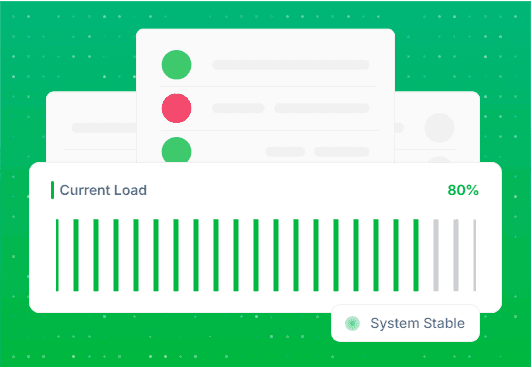
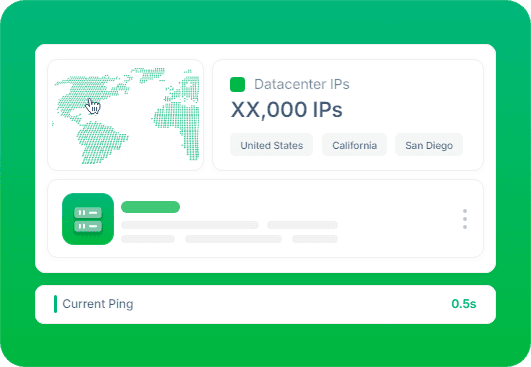
Evomi's datacenter IPs are super fast and able to handle tremendous load. This is due to the fact that datacenter connections come from enterprise class datacenters.
Average 0.45s response times on proxies
99.95% connection success rate
Benefits of Datacenter Proxies
Not only are datacenter proxies cheaper, there are a variety of cases they are superior in.
- Highly Scalable
- High Reliability and Uptime
- Fast and Stable speeds
Use cases
What Are Datacenter Proxies Used For?
The jobs where volume is the constraint and nobody at the other end is checking who owns the address — which is where the cheapest gigabyte is also the right one.
Large-scale data extraction
When a crawl is measured in millions of pages, the rate per gigabyte is the budget. Datacenter is the cheapest way to move that volume, and the pages that make up most of a crawl are usually the ones nobody is protecting.
Data extractionAI training corpora
Collecting text at corpus scale is the purest throughput problem there is: the same request shape, repeated for a very long time, against open documents. Concurrency and cost per GB are the only two numbers that matter.
AI training dataFare and travel polling
Fares change often enough that the value is in how frequently you can re-check them. Unlimited concurrency on a per-GB rate is what makes polling on a short interval affordable rather than a reason to poll less often.
Travel dataPrice and catalogue monitoring
Most catalogue pages are public and unguarded, so the cheap address is the correct one. The exception is worth knowing before you start: the retailers that personalise or defend their pricing are exactly the ones that will want a residential IP.
Market researchCountry-level QA and localisation
Free country and ISP targeting on every plan covers the check most localisation work actually needs — does this page render in the right language and currency from this country. City-level precision is a residential and mobile feature.
Localised content testingBrand and counterfeit sweeps
Sweeping marketplaces and domains for misuse of a brand is breadth-first work, and breadth is what a cheap per-GB rate buys. Escalate to residential only for the listings that answer differently to a server address.
Brand protectionFeatures
Proxy Specific Features
Evomi's datacenter proxies come with a variety of features to help you in your daily tasks.
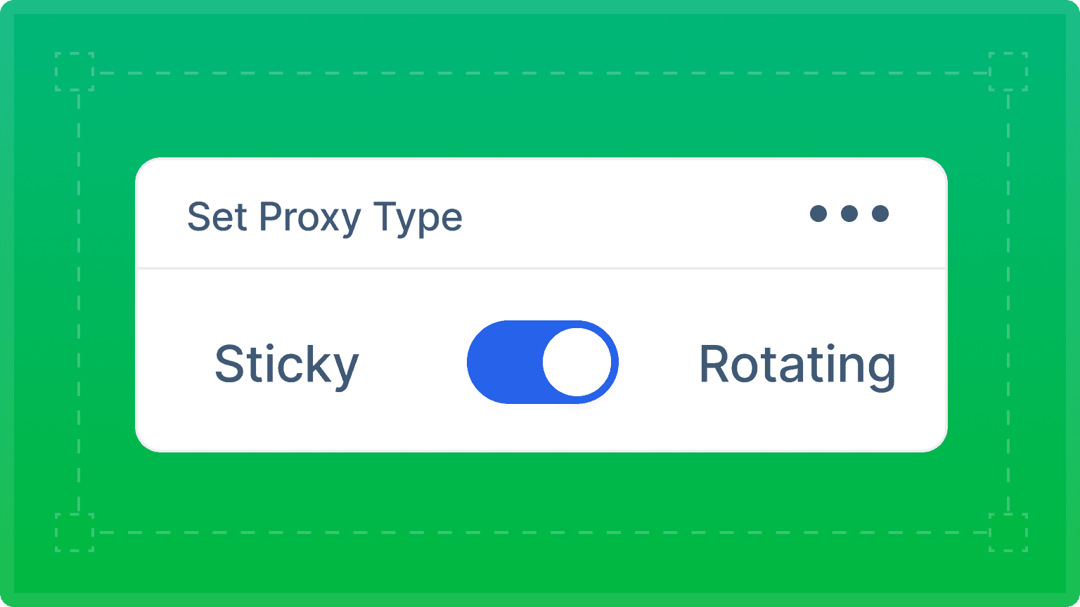
Automatic IP Rotation & Sticky sessions
Whether you cherish unlimited random IPs or you prefer using the same IP multiple times, Evomi has you covered.
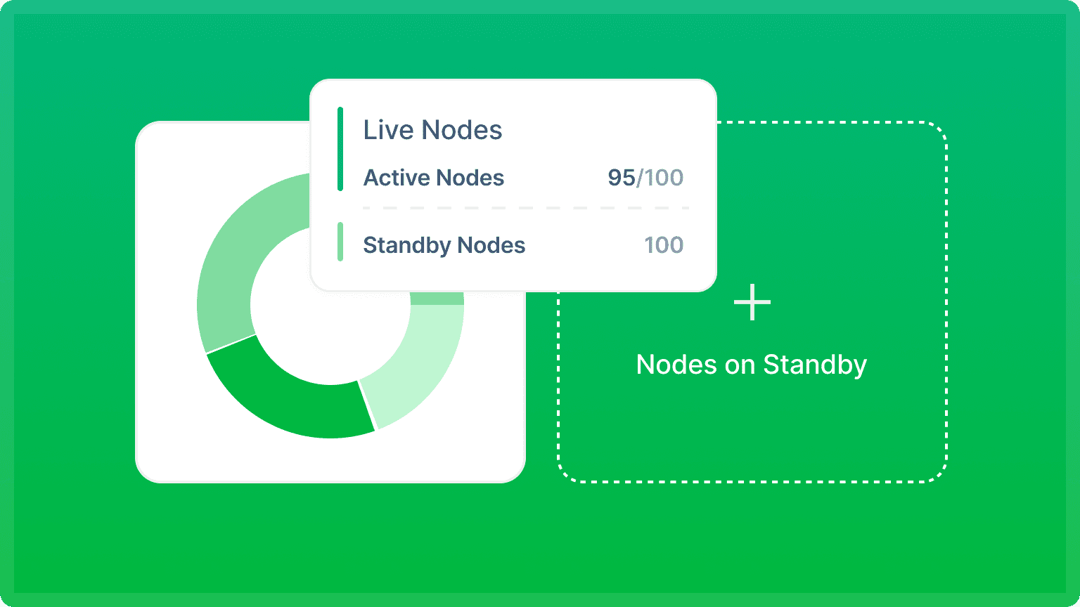
Scalability
Unlike residential IPs provided by volunteer nodes on normal PCs, datacenter connections come from servers able to handle thousands of requests per second.
Multiple Protocols
Evomi provides all users with multiple connection protocols such as HTTP, HTTPs, and Socks5.
Reviews
What Customers Say About Our Datacenter Proxies
Verified feedback from teams running our datacenter network in production.
We have been using evomi datacenter proxies for our mass scraping workflows for the past 5 months. It works! Is reliable!
 JawadPakistan
My team and I rely heavily on fast and stable proxies, and these have been superb. Speed is consistent, and the support team's responsiveness makes a real difference as many of the previous providers we've tried vary a lot when it comes to support.
 MatthewEngland
Very easy to use, great support when I reached out, and price to performance is solid. Would recommend.
 John M.United States
FAQs
Questions About Datacenter Proxies?
What buyers ask before they integrate — starting with what the product is, and which spelling of it you searched for.
What are datacenter proxies?
Datacenter proxies are proxy servers whose IP addresses belong to a hosting provider rather than to a home internet connection. Your request leaves from a machine in a datacenter, which is what makes them the fastest and cheapest proxies to run — there is no household line in the path and no consumer connection to pay for. The trade-off is visibility: because the address sits in a range registered to a hosting company, any site that looks up who owns an IP can tell it is not a residential subscriber.
Is it "datacenter proxies" or "data center proxies"?
Both, and they mean the same thing. The proxy industry writes it as one word and that is the more common search by roughly four to one, but "data center" is the standard English spelling and plenty of buyers type it that way. "DC proxies" is the shorthand for the same product. Whichever you searched for, this is the page — there is no second product hiding behind the other spelling.
Datacenter proxies vs residential proxies: which should I use?
Ask whether your target checks who owns the address. If it does not — open pages, public APIs, internal systems, most catalogue and document collection — datacenter is both faster and cheaper per gigabyte and residential buys you nothing. If it does, datacenter will be challenged or blocked no matter how much capacity you throw at it, because the problem is the range rather than the speed. The cheap way to find out is to run the job on datacenter and move only the targets that fail, which is usually a small fraction of them.
What is the difference between shared and dedicated datacenter proxies?
Evomi’s rotating, traffic-priced datacenter product does not sell dedicated or private IP allocations. A shared datacenter IP is used by more than one customer, while a dedicated one is reserved for one customer alone. Every Evomi datacenter plan uses the same rotating pool, with the rate falling as volume rises. If you need a fixed IP reserved for your use, choose Static Residential (ISP), which offers dedicated per-IP options.
Do datacenter proxies rotate, or can I keep the same IP?
Both. Rotating sessions hand you a different IP on every request, which is the default and what most collection work wants. Sticky sessions hold the same IP for 30 minutes by default, extendable to 24 hours with the lifetime parameter, and a hardsession key holds it for as long as the network allows. Neither costs extra, and switching between them is a change to the password string rather than a different endpoint or a plan upgrade.
Are datacenter proxies static?
A datacenter IP is static in the sense that a server address does not move, but this product is a rotating pool: you get a different address per request unless you ask for a sticky or hard session. If what you need is one specific address that stays yours for weeks, the product for that is static residential — which is also hosted on a server, but on an address registered to an internet provider, so it reads as residential to the target as well as staying put.
What is the difference between datacenter and ISP proxies?
Both are hosted on servers, so both are fast. The difference is who the address is registered to. A datacenter IP belongs to a hosting company, which a target can look up. An ISP proxy — also sold as a static residential proxy — is an address registered to a residential internet provider, so it carries a home ISP’s reputation while still answering at server speed. That is what you pay the difference for, and it is billed per IP with unlimited bandwidth rather than per gigabyte.
Why are datacenter proxies blocked, and are they safe to use?
They are blocked when a site decides to filter addresses by who owns them. Datacenter ranges are published and easy to identify, and blocking one costs a site nothing, because none of its real customers are browsing from a rack. That is a targeting question rather than a safety one: the traffic is ordinary HTTP over an authenticated connection, and the practical risk is a job that returns challenges instead of pages. Where that happens, the answer is a residential or mobile address, not a bigger datacenter pool.
How does datacenter pricing scale?
Pay as you go costs $0.45/GB, then $0.40/GB on the 200 GB plan, $0.35/GB on 500 GB, and $0.30/GB on the 1,000 GB plan at $300 a month. Every plan gets the same pool, the same rotation and sticky sessions, the same free country and ISP targeting and unlimited concurrency — the rate is the only thing the ladder changes, along with an account manager from the 200 GB plan up.
Are cheap datacenter proxies worth it?
A low rate per gigabyte is only cheap if the requests succeed, so the number to compare is the cost of a successful response rather than the sticker price. Where datacenter works, it is the cheapest proxy there is and paying residential rates is waste; where it does not, the cheapest datacenter proxy in the world has a success rate of zero and any price is too high. Free proxy lists fail this test twice over — unknown operators, no uptime, and no way to tell who else is on the address.
Is there a limit on concurrent connections?
No. Concurrency is unlimited, and datacenter nodes are servers that handle thousands of requests per second, so you can raise thread counts without hitting a per-connection cap.
Which protocols are supported?
HTTP, HTTPS and SOCKS5 over TCP, authenticated with a username and password. IP whitelisting is not supported.
How precise is datacenter geo-targeting?
You can target a country and an ISP, free on every plan. City and region precision is a residential and mobile feature, so use those pools if a job needs it.
What uptime can I expect?
The datacenter network runs on a 99.9% uptime SLA, and support is available 24/7 if a job needs attention sooner.
Locations
Available in 195+ Countries
We provide you access to a global network of ethically sourced proxy nodes from around the world.


Certified, audited & awarded
At Evomi, ethics and compliance are non-negotiable. We hold ourselves and every upstream partner to the highest industry standards, building a safe, transparent marketplace for both the businesses that rely on our proxies and the people who choose to share their IPs.
 EWDCI Member
 SOC 2 Type II
 ISO 27001
 Best Value Provider
 ProxyVero #1 Overall
 Caproxy Rated
 Proxyway Rated
 G2 Rated
Integration
Integrate into your Application
- Endpoint generator
- Developer-friendly documentation
- Integration with third-party software
- Single Port for all Requests
curl -x dcp.evomi.com:2000 -U "customer-USER:PASS" \
https://ip.evomi.com/sDriving it from an AI assistant instead? The same credentials work over MCP.
Use Cases
Let Evomi Empower your Business
Utilizing proxy solutions from Evomi can allow your corporation to grow further beyond your wildest expectations.
Search Engine Monitoring
Utilize our proxy network for smooth and efficient search engine data aggregation.
Learn More about Search Engine MonitoringAI Training
Enhance your AI models with high-speed proxies for detailed market analysis.
Learn More about AI TrainingLocalized Content Testing
Effectively manage and scale your affiliate marketing campaigns with our proxy solutions.
Learn More about Localized Content TestingData Extraction
Test and optimize content across regions using our geo-targeted residential proxies.
Learn More about Data ExtractionBrand Protection
Utilize our proxies to maintain confidentiality and data integrity.
Learn More about Brand ProtectionTravel Data
Utilize our dashboard to access and manage travel data and support tickets.
Learn More about Travel DataDatacenter Proxy Guides
Setup walkthroughs, and an honest look at where datacenter IPs are the better choice.