


Buy 3G/4G/5G Mobile Proxies
Reach mobile-first sites through 3M+ genuine carrier IPs across 150+ countries, with rotating or sticky sessions from $2.20/GB.
Pricing
Plans priced for all your needs
$170 billed monthly
- Traffic50 GB
- City-level targeting
- Account Manager
$320 billed monthly
- Traffic100 GB
- City-level targeting
- Account Manager
$2,600 billed monthly
- Traffic1000 GB
- City-level targeting
- Account Manager
$11,000 billed monthly
- Traffic5000 GB
- City-level targeting
- Account Manager
The basics
What Is a Mobile Proxy?
The short version, before the specifications: what the address actually is, and why a target treats it differently.
A mobile proxy routes your request through a device sitting on a cellular network, so the site you are calling sees an IP address a mobile operator handed out — not a datacenter range, and not a fixed home line. The response travels back the same way.
That is also what makes the address awkward to block. Mobile operators run carrier-grade NAT: one public IP carries many subscribers at once, and it moves between them as devices connect and drop. Blocking it costs the site a slice of that carrier’s real customers, and by the time the block bites, the address may be answering for someone else entirely.
Evomi’s mobile pool is sourced the way its residential pool is: from opt-in volunteer nodes, on real 3G, 4G and 5G connections — 3 million+ mobile IPs across 150+ countries. Requests average under half a second, the network documents a 99.95% connection success rate, and every request draws a new IP unless you ask it to hold one.
3G, 4G and 5G
- 3G
- The oldest generation still carrying traffic. Retired in some markets, still in service in others.
- 4G / LTE
- The generation most mobile data in the world still runs on, and the bulk of what a mobile pool sees.
- 5G
- The newest generation: more throughput and lower latency wherever the coverage has actually been built.
The generation sets how fast the link is, not how much a target trusts it — the trust comes from the address belonging to a carrier at all. So Evomi prices one mobile GB, not three, and the documented targeting keys select a place or a carrier rather than a radio generation.
Real Mobile Connections
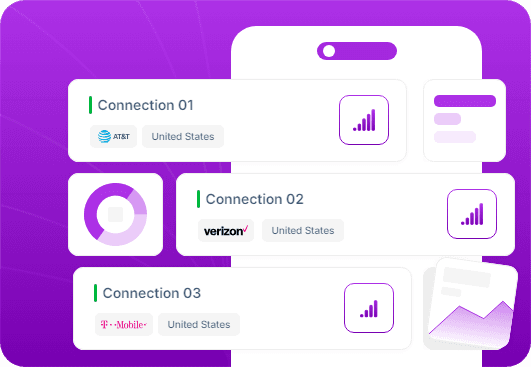
Tap into Evomi's network of real mobile IPs for reliable, real-user compatibility across a wide range of websites. The pool is sourced from paid, opt-in volunteer nodes.
Average 0.5s response times on proxies
99.95% connection success rate
3 million+ mobile IPs in the pool
Why Mobile Proxies?
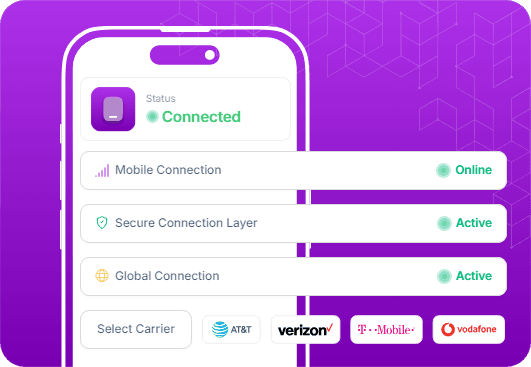
Mobile proxies tend to be the strongest IPs in the market as they are often shared/rotated between genuine users.
- Guaranteed Mobile Connection
- Reliable real-user connections
- Broad regional coverage
- Large collection of carriers
Features
Proxy Specific Features
Evomi's mobile proxies come with a variety of features to help you in your daily tasks.
Global Coverage
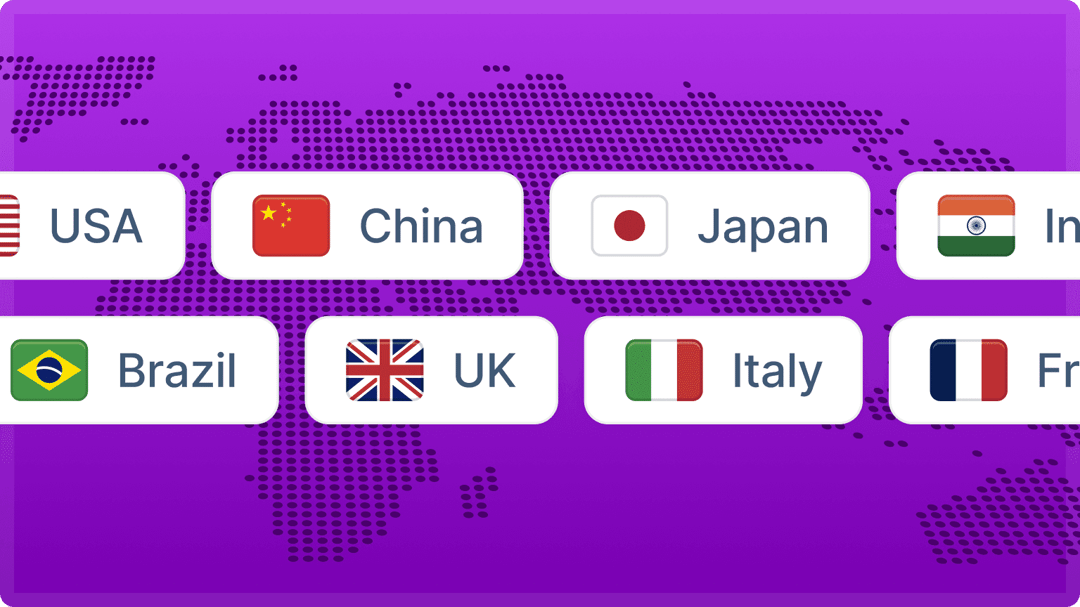
3 million+ carrier connections in 150+ countries, selectable by country, region, city or continent — and by the carrier itself when a job has to run on one mobile network.
Multiple Protocols
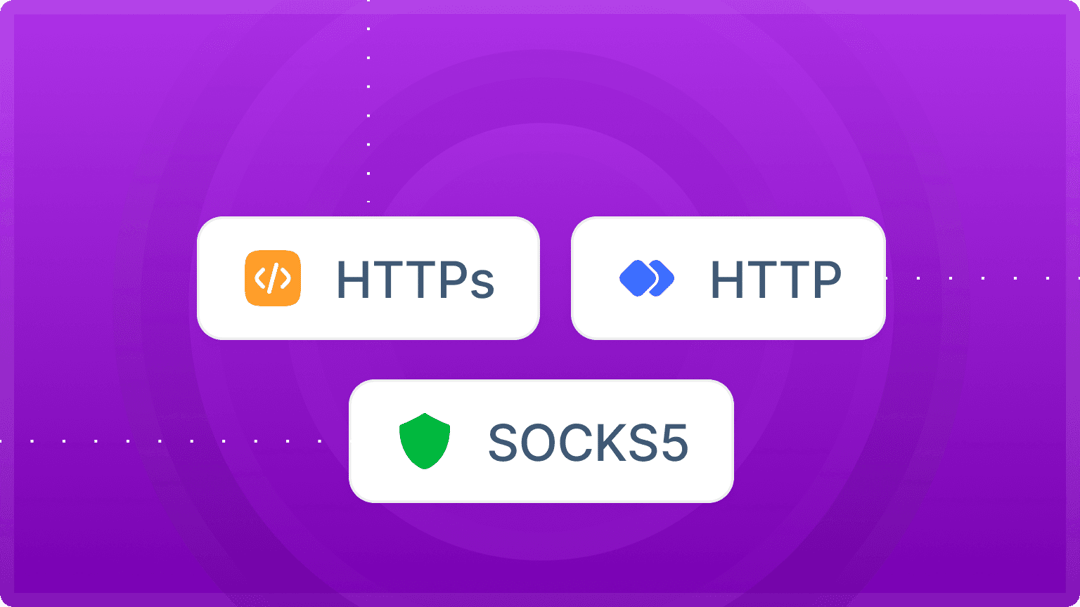
HTTP on port 3000, HTTPS on 3001 and SOCKS5 on 3002, from one endpoint and one set of credentials. Any client that speaks a proxy protocol can use them unchanged.
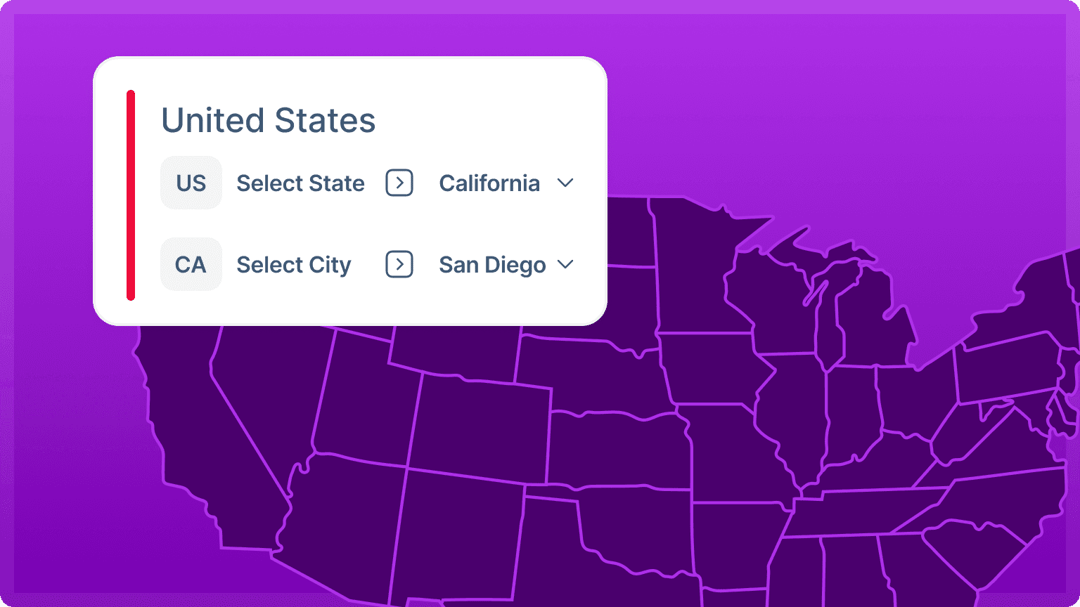
City/State/Country targeting
Add a targeting key to the password field and the request leaves from where you asked. Targeting is included on every plan rather than priced as an add-on.
Control
Rotation, Sessions and Targeting
Every option below is a key you append to the password field — no separate endpoint, no plan upgrade.
Rotate every request
no parameterThe default. Each request leaves from a different mobile IP, which is what you want for scraping breadth-first across a target.
Sticky session
session-<6–10 chars>Holds one IP across requests and is tuned for success rate, so it may move you to keep the connection working. Pair it with lifetime-<minutes> to set how long it holds: 30 minutes by default, up to 1440 — a full 24 hours. Ask for longer and the request returns a 412.
Hard session
hardsession-<6–10 chars>Same format, opposite priority: it keeps the exact IP for as long as it can and ignores lifetime. Use it when a logged-in session breaks if the address moves.
Session keys go in the password field alongside your targeting, and the first request fixes the IP. Changing the targeting mid-session does not move you to a new one.
| Key | Selects | Example |
|---|---|---|
country- | A country, by ISO code — and for some, the full name. | country-US |
region- | A state, province or territory inside that country. | region-california |
city- | A city, lowercase, with any space written as a dot. | city-new.york |
continent- | One of africa, asia, europe, north.america, oceania, south.america. | continent-europe |
isp- | A single mobile carrier, by shortcode — a network identifier rather than a brand name, so copy it exactly. The full list lives in the dashboard’s Proxy Generator. | isp-tmobileusainc |
geosource- | Which geolocation database resolves the keys above. Defaults to ip-api.com. | geosource-maxmind |
The available countries, regions, cities and carrier shortcodes are listed in the dashboard's Proxy Generator, and the full reference is in the mobile proxy documentation.
Comparison
When to Use Mobile Instead
Mobile carries the most trust per request and the highest price per GB. It earns that on some targets and wastes money on others.
Mobile
from $2.20/GBReal devices on 3G/4G/5G carrier networks
Targets that treat a carrier IP as the highest-trust visitor: social platforms, app traffic, ad checks on mobile inventory
Residential
from $0.49/GBReal household devices on fixed lines
The default for volume scraping — far cheaper per GB, and enough trust for most targets
Static residential (ISP)
from $1.00/IPResidential-registered IPs hosted on premium ASNs
Keeping one address for weeks at a time, with bandwidth billed per IP instead of per GB
Datacenter
from $0.30/GBServer IPs in datacenter ranges
Speed and cost on targets that do not check where the address lives
Reviews
What Customers Say About Our Mobile Proxies
Verified feedback from teams routing traffic through real carrier IPs.
Best solution I’ve found thus far. I’ve had quite issues with quite a few providers now, either it is the customer service or continuous downtime, but I am pleased to say the least with the quality of mobile proxies here.
 MarcBelgium
Evomi's proxies are exactly what we needed, fast and stable. Support answered my questions very quickly and made the setup easy. It's refreshing to work with a service that's reliable. Recommended!
 BeckhamUnited States
I’ve been using Evomi for over a year. During this time, there have only been brief technical issues, which were resolved fairly quickly. I especially like that the support team is always available, responds promptly, and genuinely tries to help instead of just brushing you off.
 VladimirUnited States
FAQs
Questions About Mobile Proxies?
Everything teams usually ask before routing traffic through real carrier IPs — and live chat for anything else.
What is a mobile proxy?
A mobile proxy sends your request through a device on a cellular network, so the target site sees an IP address that a mobile operator issued rather than a datacenter address or a fixed home line. Because operators put many subscribers behind one public address, that address is shared and reassigned constantly, which is what makes it hard for a site to block without collateral damage.
Are these genuine mobile connections?
Yes. Every IP belongs to a real device on a 3G, 4G or 5G carrier network, sourced from opt-in volunteer nodes that are paid for the bandwidth they share.
What is a 4G proxy, and is a 5G one different?
A 4G proxy is simply a mobile proxy whose device is connected over 4G/LTE; a 5G proxy is one connected over 5G. The generation affects the speed and latency of the link, not how much trust the target places in the address — that comes from it being a carrier address at all. Evomi charges one price per GB across 3G, 4G and 5G, and targeting selects a country, region, continent or carrier rather than a network generation.
Should I use mobile or residential proxies?
Residential is the default for volume work: it is far cheaper per GB and carries enough trust for most targets. Reach for mobile when a target treats carrier traffic as its most credible visitor — social platforms, mobile app endpoints and ad checks on mobile inventory — or when residential IPs are being challenged on a target you need to keep working.
Why are mobile IPs harder to block than residential ones?
Carriers put thousands of real subscribers behind the same public address, so a site that blocks a mobile IP blocks its own paying visitors along with you.
What do mobile proxies cost?
From $3.98/GB pay as you go, dropping to $3.40/GB on the 50 GB plan, $2.60/GB at 1,000 GB and $2.20/GB on the 5,000 GB Enterprise plan.
How precise can I target mobile IPs?
By country, and by region or city within it, across 150+ countries — plus the carrier, if you need traffic on one mobile network. Targeting is free on every plan, and any field left random draws from the whole pool.
How long does a mobile IP stay the same?
By default it does not: every request leaves from a new IP. Add a session key to hold one, for 30 minutes by default and up to 24 hours with the lifetime parameter, or use a hardsession key to keep the same address for as long as the network allows. Concurrent sessions are unlimited on every plan.
Do you offer US mobile proxies?
Yes. The United States is one of the 150+ countries in the pool, reachable with country-US, and you can narrow it further to a state with the region key or to one carrier with the isp key.
How is mobile traffic billed?
Per gigabyte, at the rate of the plan you are on, with targeting and sticky sessions included rather than charged as extras. Each request has a minimum billed size of 512 bytes, so a request that transfers less than that still counts as 512.
How fast are mobile proxies?
Response times average under half a second and the network carries a 99.9% uptime guarantee, though mobile is inherently slower than datacenter or residential routing.
Are free mobile proxies worth using?
Rarely. A free mobile IP is either a device whose owner did not agree to carry your traffic, or a heavily reused address that targets already recognise — and both problems get worse the more people share the list. Evomi runs the opposite model: the nodes opt in and are paid, which is also why the pool holds up under load.
Locations
Available in 150+ Countries
We provide you access to a global network of ethically sourced proxy nodes from around the world.


Certified, audited & awarded
At Evomi, ethics and compliance are non-negotiable. We hold ourselves and every upstream partner to the highest industry standards, building a safe, transparent marketplace for both the businesses that rely on our proxies and the people who choose to share their IPs.
 EWDCI Member
 SOC 2 Type II
 ISO 27001
 Best Value Provider
 ProxyVero #1 Overall
 Caproxy Rated
 Proxyway Rated
 G2 Rated
Integration
Integrate into your Application
- Endpoint generator
- Developer-friendly documentation
- Integration with third-party software
- Single Port for all Requests
curl -x mp.evomi.com:3000 -U "customer-USER:PASS" \
https://ip.evomi.com/sDriving it from an AI assistant instead? The same credentials work over MCP.
Use Cases
Let Evomi Empower your Business
Utilizing proxy solutions from Evomi can allow your corporation to grow further beyond your wildest expectations.
Search Engine Monitoring
Utilize our proxy network for smooth and efficient search engine data aggregation.
Learn More about Search Engine MonitoringAI Training
Enhance your AI models with high-speed proxies for detailed market analysis.
Learn More about AI TrainingLocalized Content Testing
Effectively manage and scale your affiliate marketing campaigns with our proxy solutions.
Learn More about Localized Content TestingData Extraction
Test and optimize content across regions using our geo-targeted residential proxies.
Learn More about Data ExtractionBrand Protection
Utilize our proxies to maintain confidentiality and data integrity.
Learn More about Brand ProtectionTravel Data
Utilize our dashboard to access and manage travel data and support tickets.
Learn More about Travel DataMobile Proxy Guides
Why carrier IPs behave differently, what they are genuinely good for, and how 4G and 5G compare.